← Back/Projects / Software and AI
ToleranceForge
Founder and Developer, AI tool for GD&T and cost, Jun 2026 to present
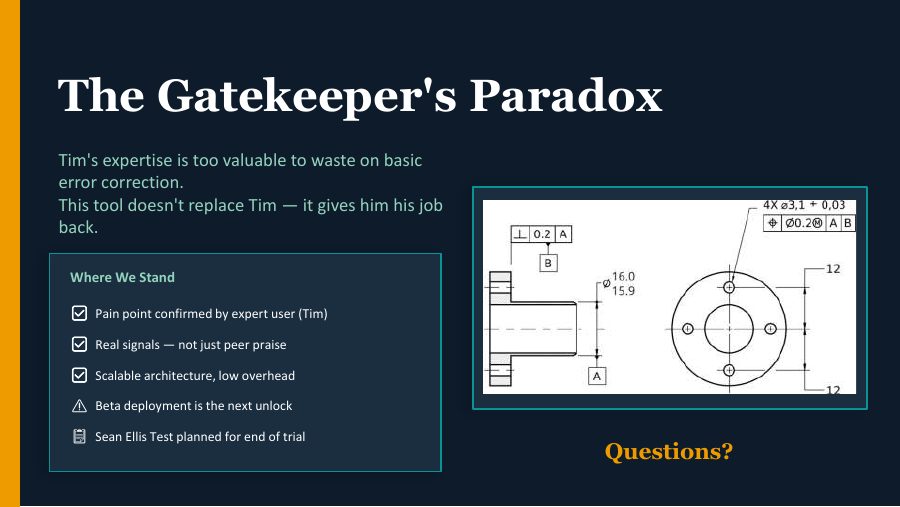
Scroll sideways through the deck, or open the PDF.
| Role | Founder and Developer |
|---|---|
| Context | AI tool for GD&T and cost |
| Dates | Jun 2026 to present |
| Field | Design for Manufacturing, Applied AI |
| Skills | GD&T (ASME Y14.5, ISO 1101), Tolerance Analysis, Full-Stack Development, Product Scoping, Applied AI, Python, Claude Code, Cost Modeling, Customer Discovery |
The problem
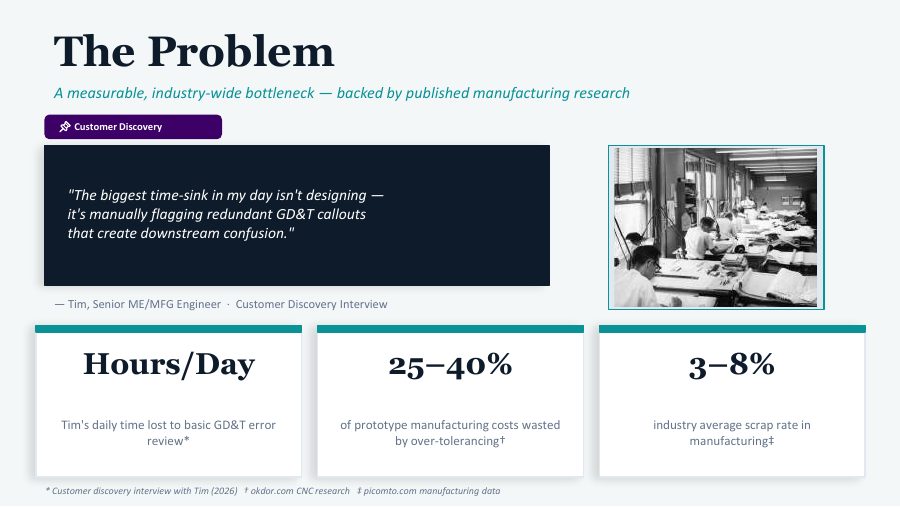
Geometric dimensioning and tolerancing is treated as a compliance checkbox in most engineering workflows. It is actually a cost lever. Tightening a tolerance or over-specifying a part adds real dollars to every unit, but no existing tool connects the three things an engineer needs to catch it: CAD geometry, tolerance analysis, and procurement pricing.
SolidWorks and Creo can check whether a design fits, but have no idea what it costs to make it fit. Procurement platforms like Xometry know the price of a part but cannot see the drawing. Specialized tolerance software like 3DCS is expensive and expert-only. Human value engineering review works but runs over $100,000 per reviewer and does not scale. I know this gap firsthand. I did manual tolerance stack-ups at Asensus, and the process is tedious and error-prone even when you understand GD&T well.
What I built
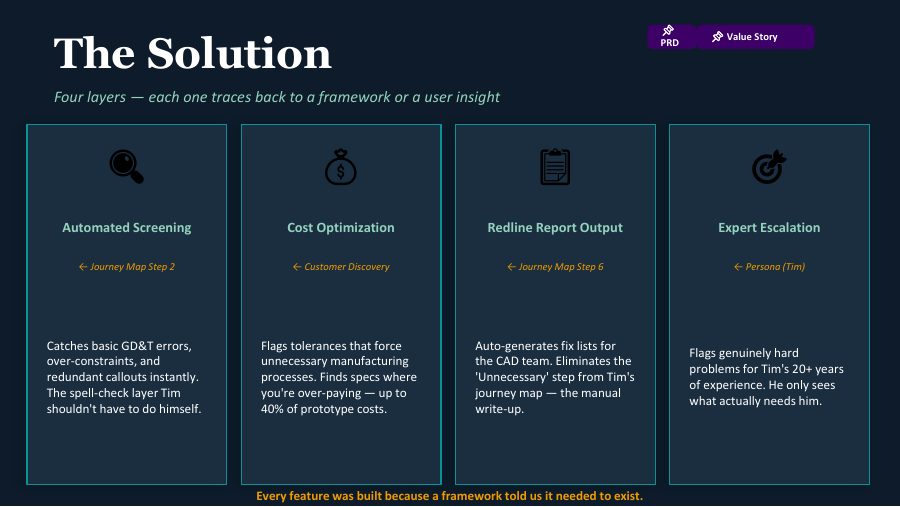
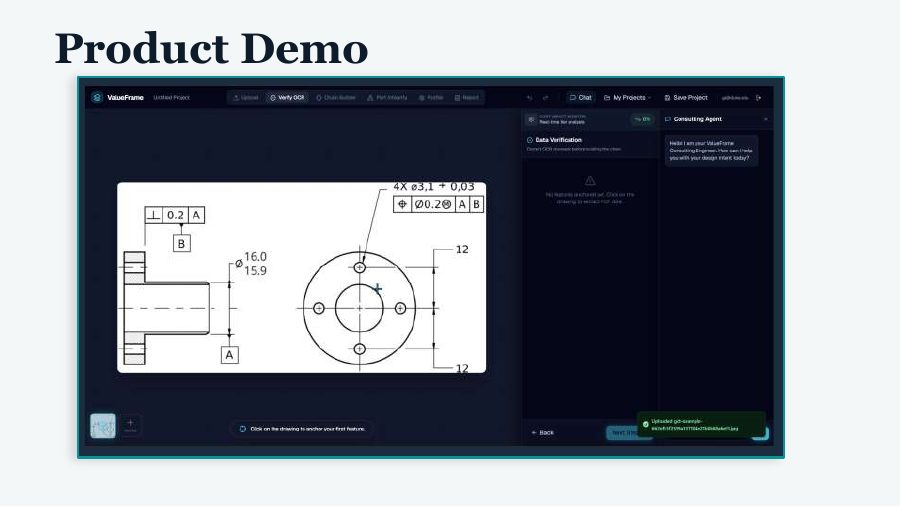
- A multi-model AI tool that accepts a 2D drawing, flags GD&T errors against ASME Y14.5 and ISO 1101, compares tolerance callouts across a stack of drawings, and surfaces the highest-cost callouts with a price-backed alternative
- Built the full stack myself during Duke’s AI Product Sprint, using Claude Code as a development partner, third-party APIs for supporting data, custom scrapers for parts and pricing not available through a clean API, and a hosted deployment
- Scoped the MVP deliberately narrow for an 8-week sprint. My first draft tried to parse 3D assemblies and hit live supplier APIs at once. Cutting that down to the smallest version that still delivers a price attached to a specific tolerance decision was the hardest discipline on the project
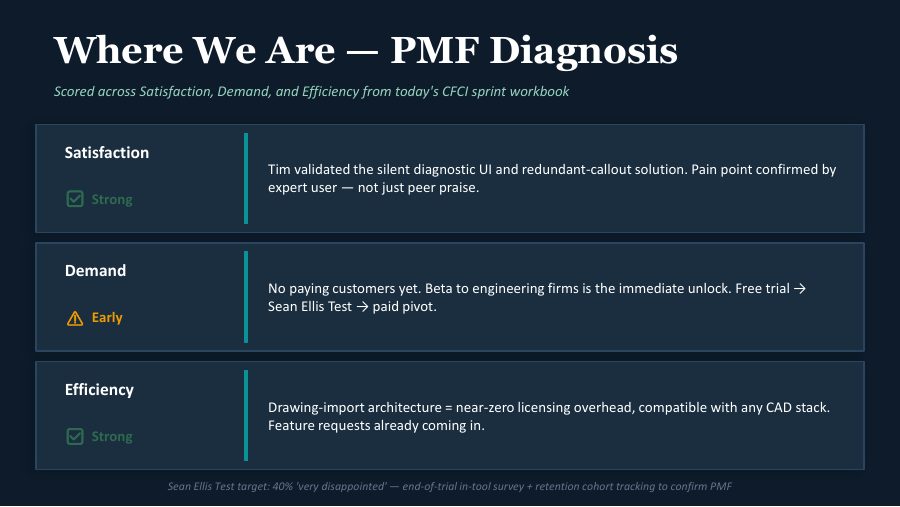
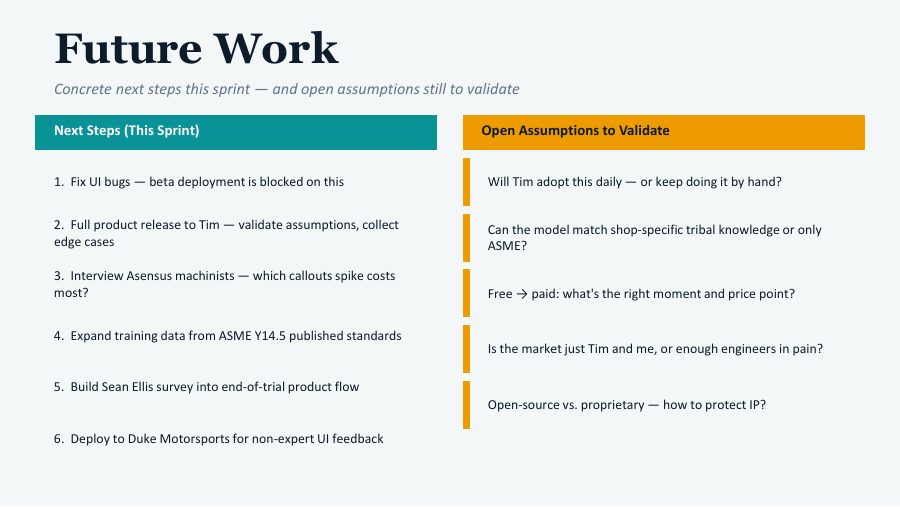
- Beta tested and refined the tool with veteran engineers from established hardware companies, with a domain expert of roughly 15 years in GD&T as a technical validator
- Former colleagues were working on a similar process, and I passed parts of the work off to them so the idea kept moving beyond the sprint
The pitch
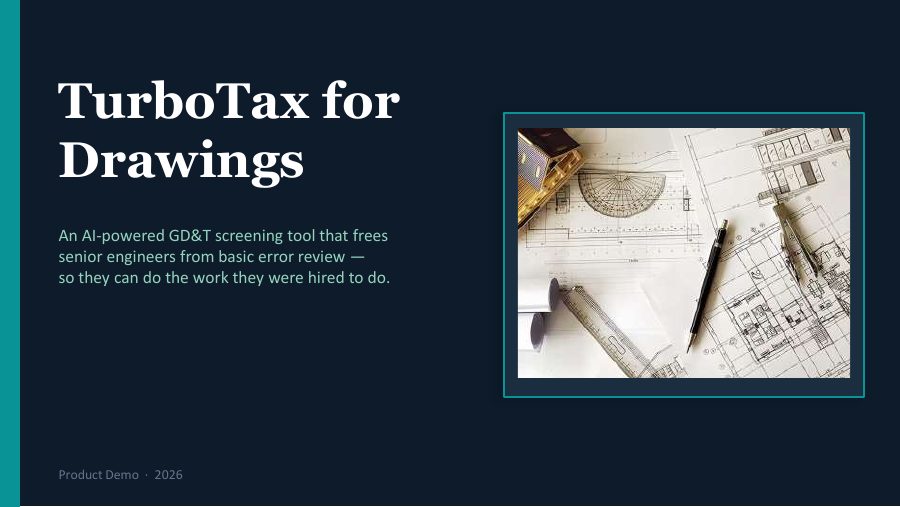
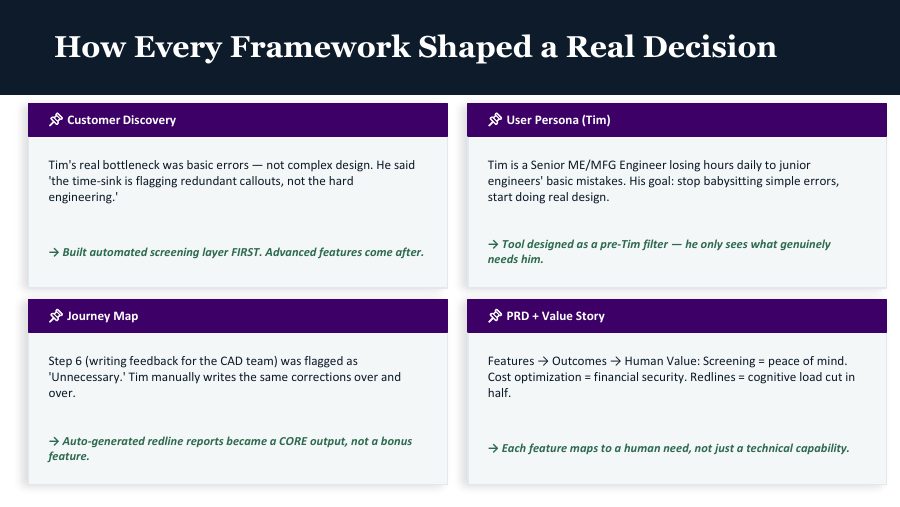
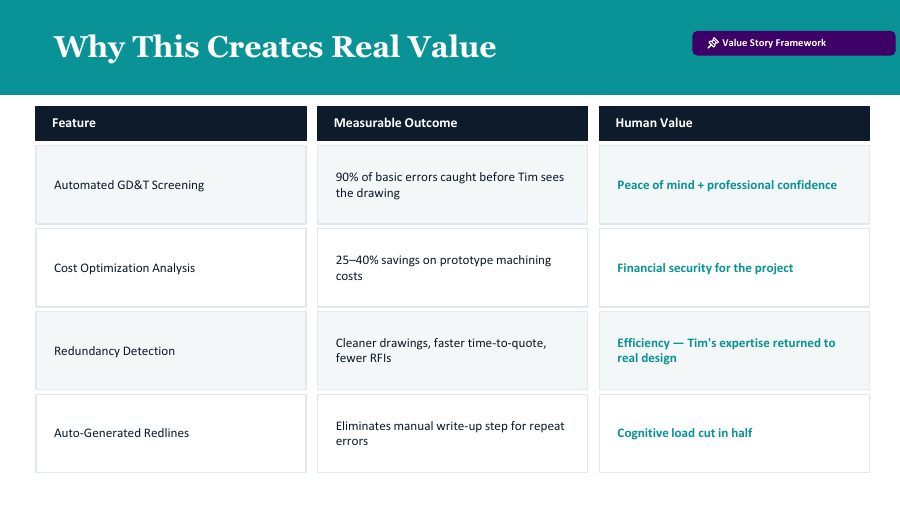
The one-line version from the final sprint pitch: TurboTax for drawings. An automated screening layer that catches basic GD&T errors, over-constraints, and redundant callouts before a senior engineer ever sees the drawing, flags tolerances that force unnecessary manufacturing processes, and auto-generates the redline report. Hard problems escalate to the human. The product came out of customer discovery with a senior manufacturing engineer whose biggest daily time sink was not design but flagging the same basic callout errors over and over.
The live demo works. I am keeping it unlinked for now while it matures. Duke Pratt covered the sprint and this project in October 2026: AI-Driven Product for Builders.