Propane-Air Flashback Experiment
Apparatus design and data analysis, Duke ME 331 Thermodynamics, Spring 2026
| Role | Apparatus design and data analysis |
|---|---|
| Context | Duke ME 331 Thermodynamics |
| Dates | Spring 2026 |
| Field | Combustion, Safety-Critical Systems |
| Skills | Experimental Design, Uncertainty Analysis, Technical Writing, Apparatus Build, Combustion, Data Analysis, 3D Printing, Safety Engineering, Leadership |
The problem
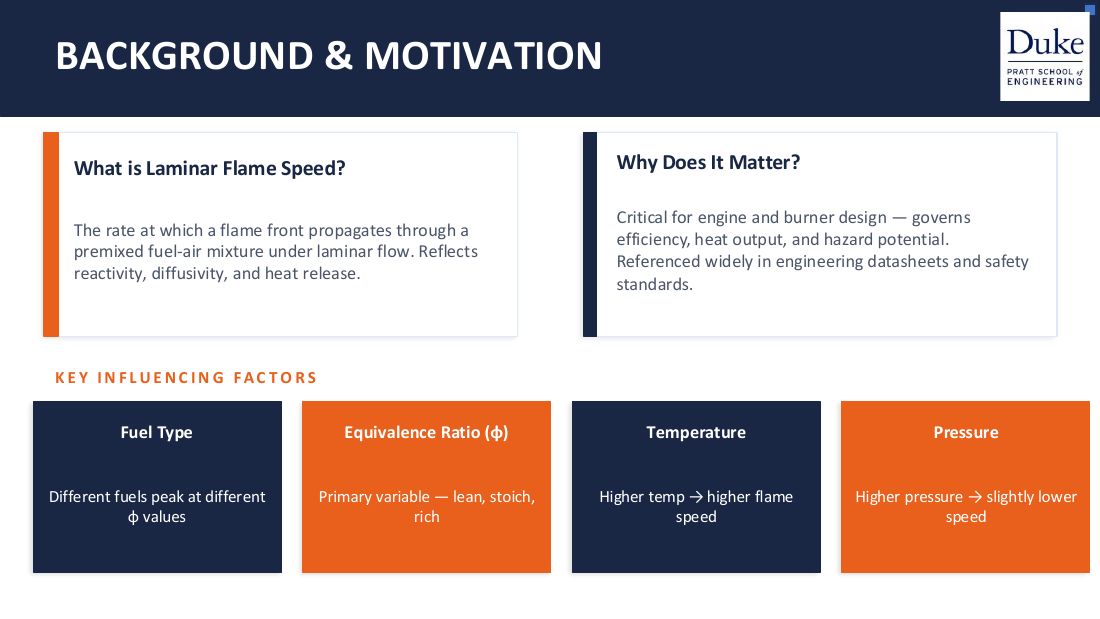
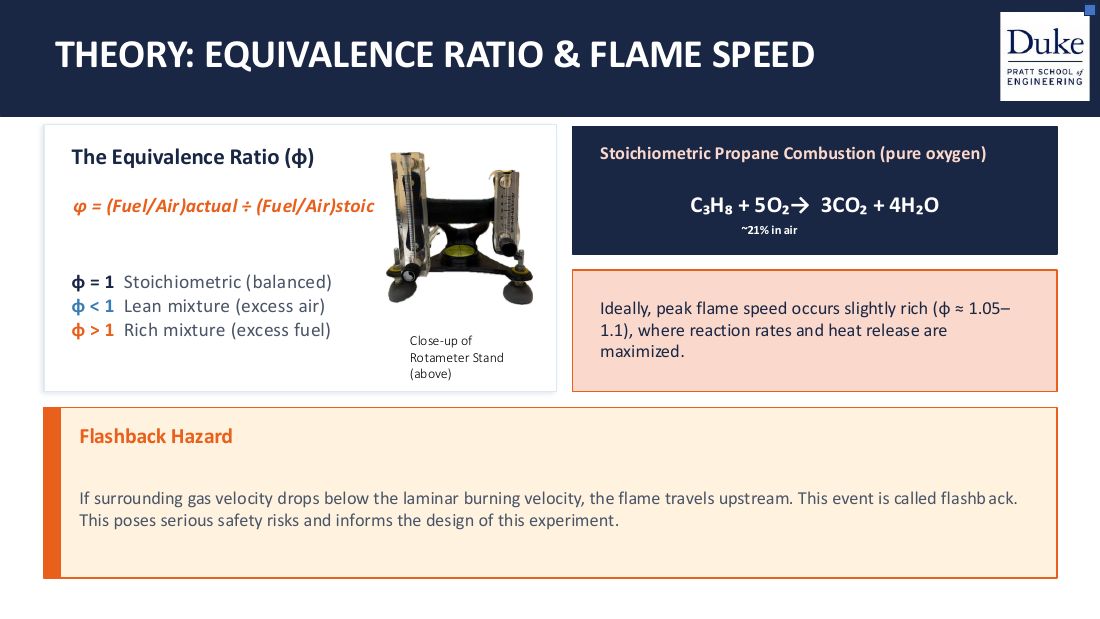
Flashback happens when bulk gas velocity drops below the laminar flame speed. The flame front propagates upstream into the fuel line and ignites what was never meant to burn. It is a principal safety hazard in industrial burners, gas turbines, and residential heating. Understanding it means knowing the laminar flame speed of the mixture with precision, and that is hard to measure. You need accurate flow metering, controlled ignition, video flame tracking, and rigorous error propagation, all inside a live combustion environment.
Duke is redesigning ME 331 to give students hands-on exposure early. Our team was asked to design, build, test, and document a flashback experiment from scratch, rigorous enough to pass down as a reusable platform.
What we built
Four-person team under Dr. George Delagrammatikas. I led apparatus design, experimental execution, and data analysis.
Apparatus
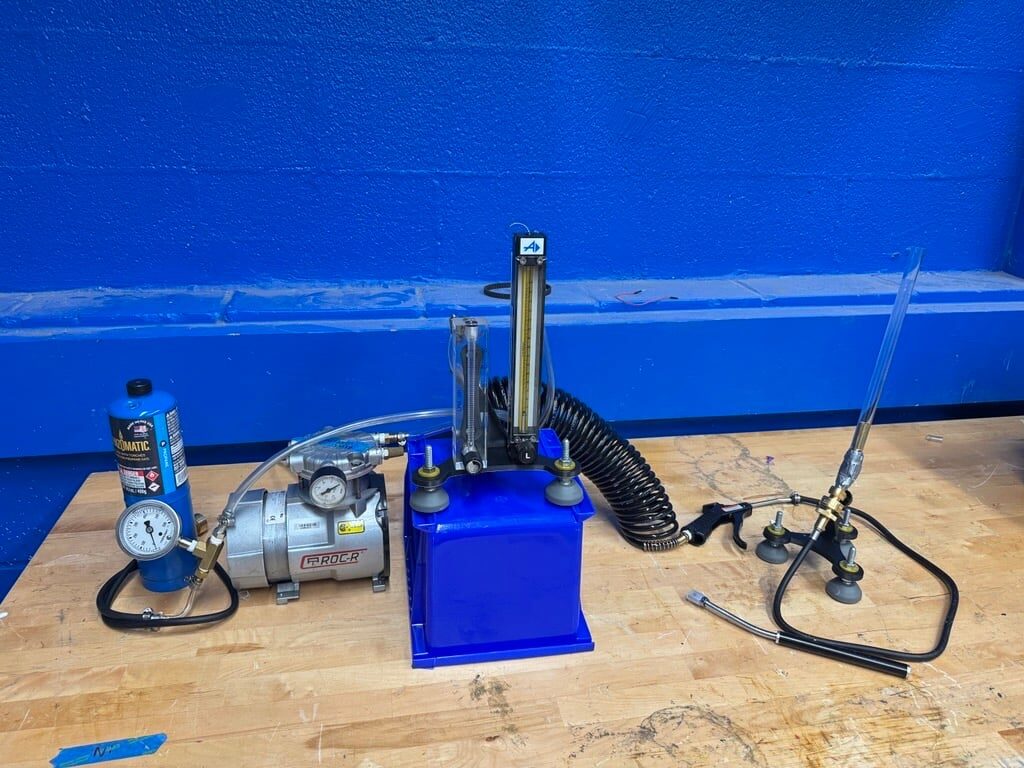
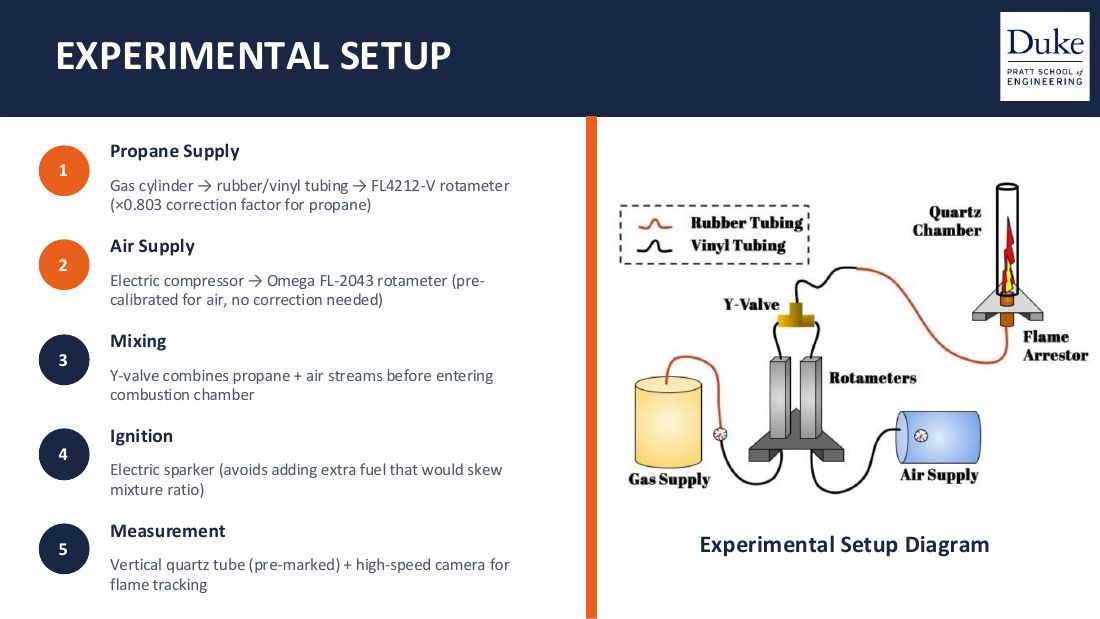
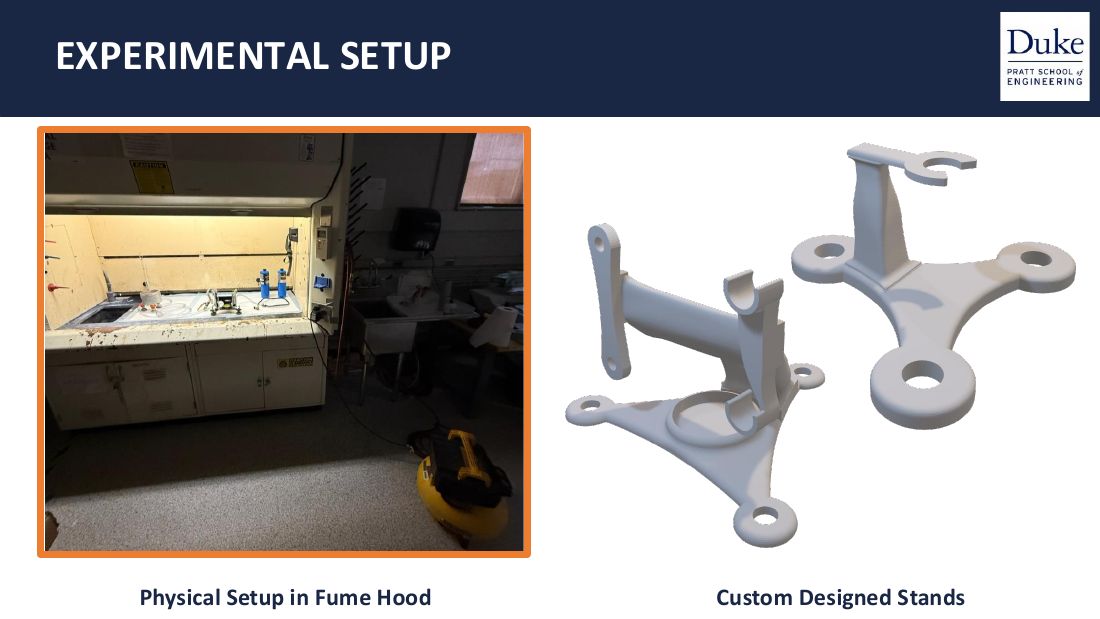
- Premixed burner from the component level: propane supply with an FL4212-V rotameter, compressed air with an Omega FL-2043 rotameter, brass Y-valve mixing junction, quartz combustion tube on a 3D-printed leveling stand, electric sparker ignition
- Safety built in: flashback arrestor and dual check valves on the propane line, aluminum tape fireproofing at joints, a steel shield wall around the tube, fume hood operation, Class ABC extinguisher within reach
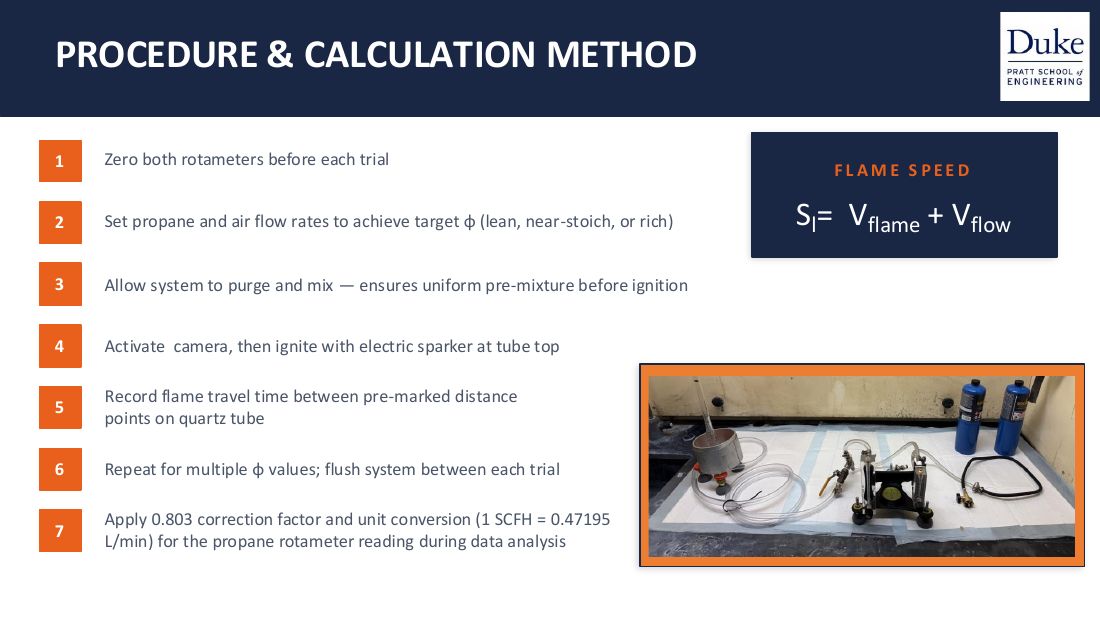
- Derived a propane rotameter correction (0.803 density factor) for an instrument calibrated on air. Missing it would have inflated every equivalence ratio by about 2.12x
Execution
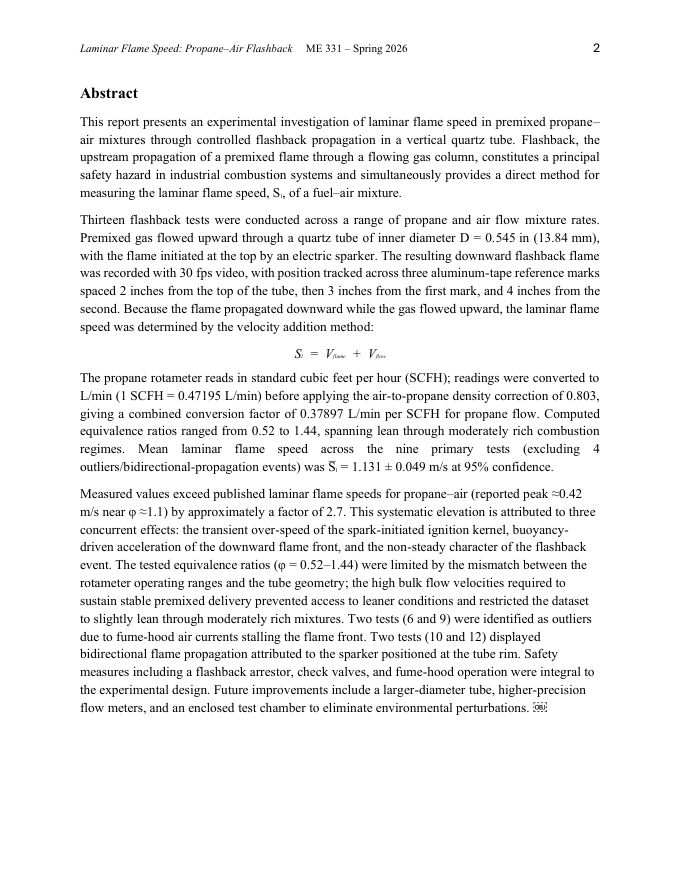
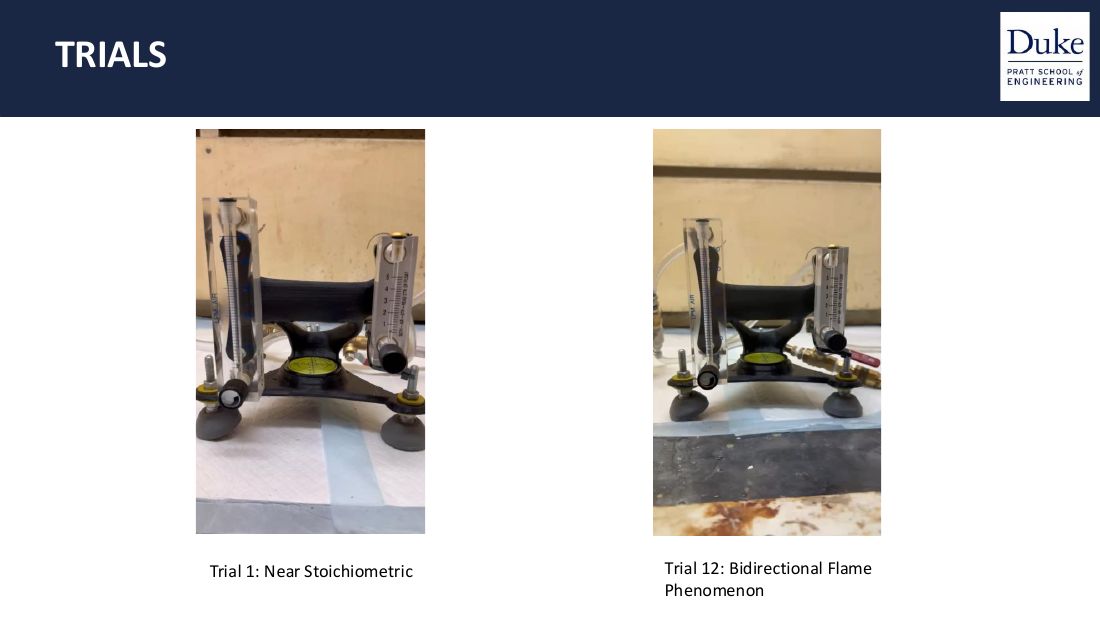
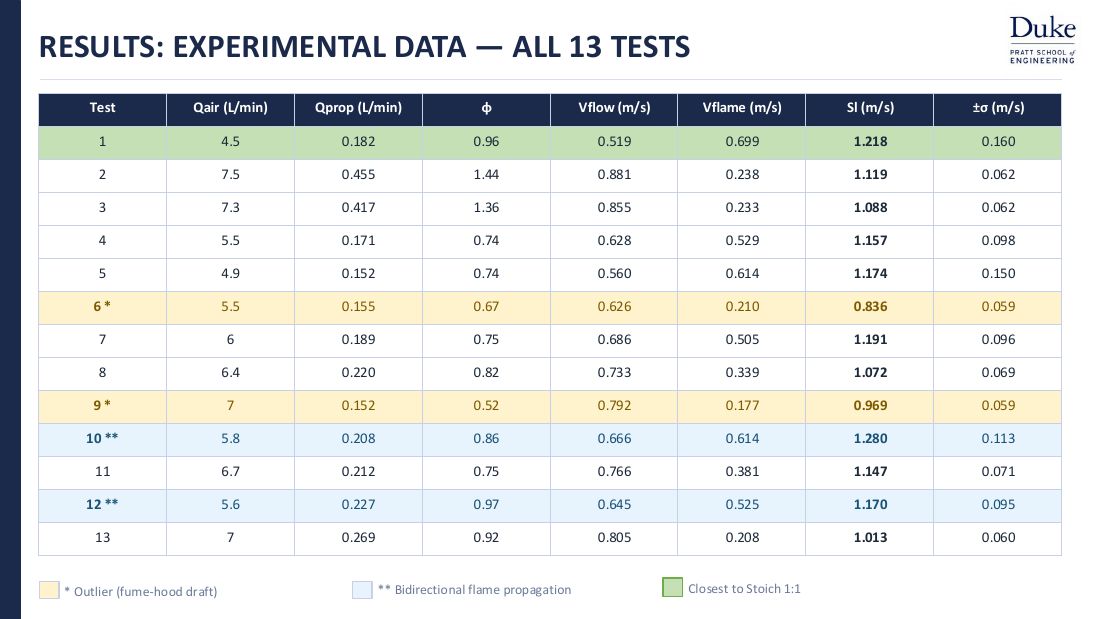
- 13 controlled flashback tests across equivalence ratios from 0.52 to 1.44
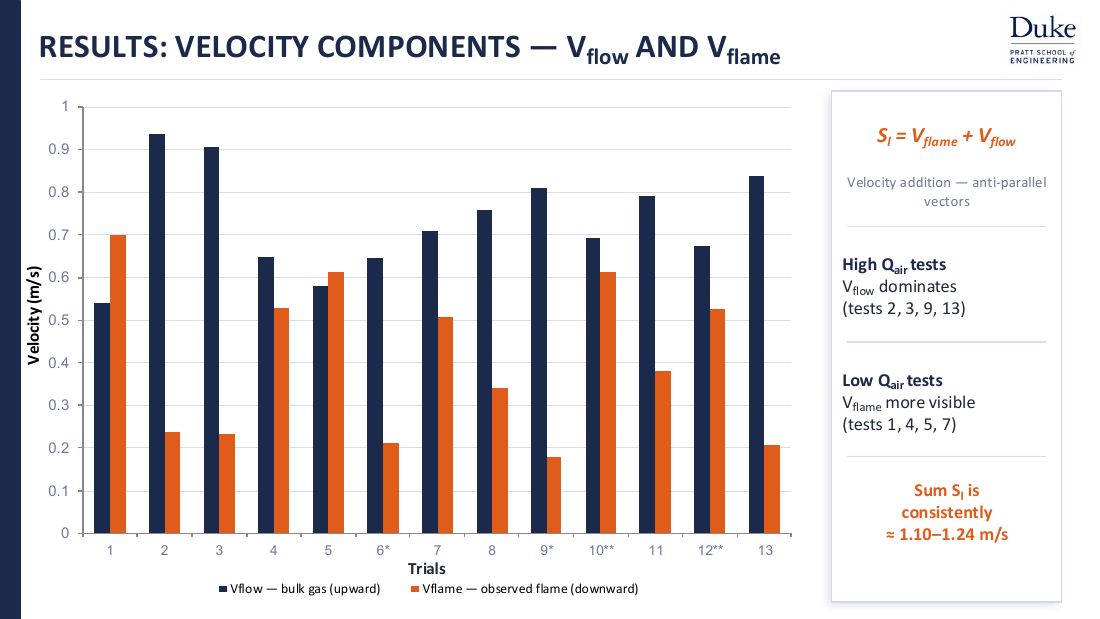
- Flame speed measured frame by frame from 30 fps video across three reference marks
- Velocity addition method to compute laminar flame speed from anti-parallel flame and flow vectors
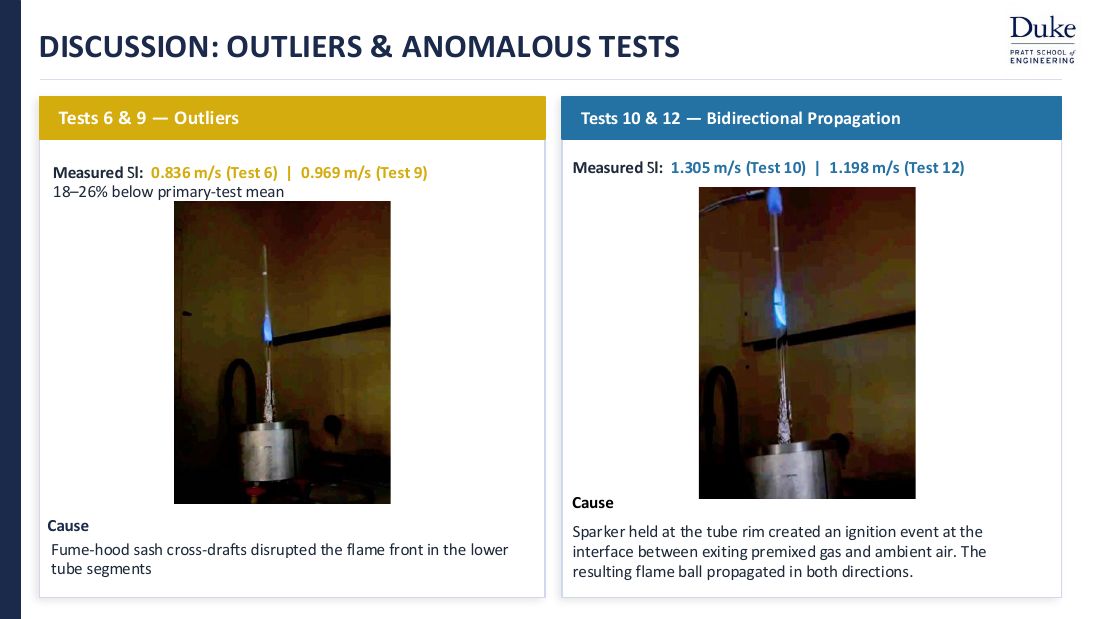
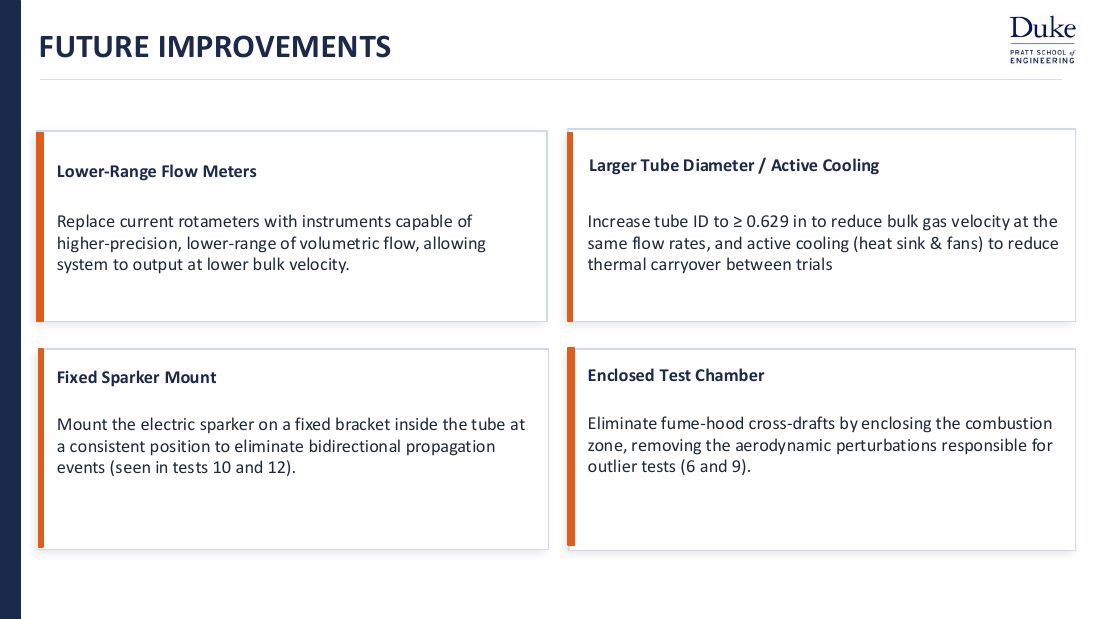
- Diagnosed two classes of anomaly: tests 6 and 9 as outliers from fume-hood cross-draft, tests 10 and 12 as bidirectional propagation from inconsistent sparker placement
Analysis
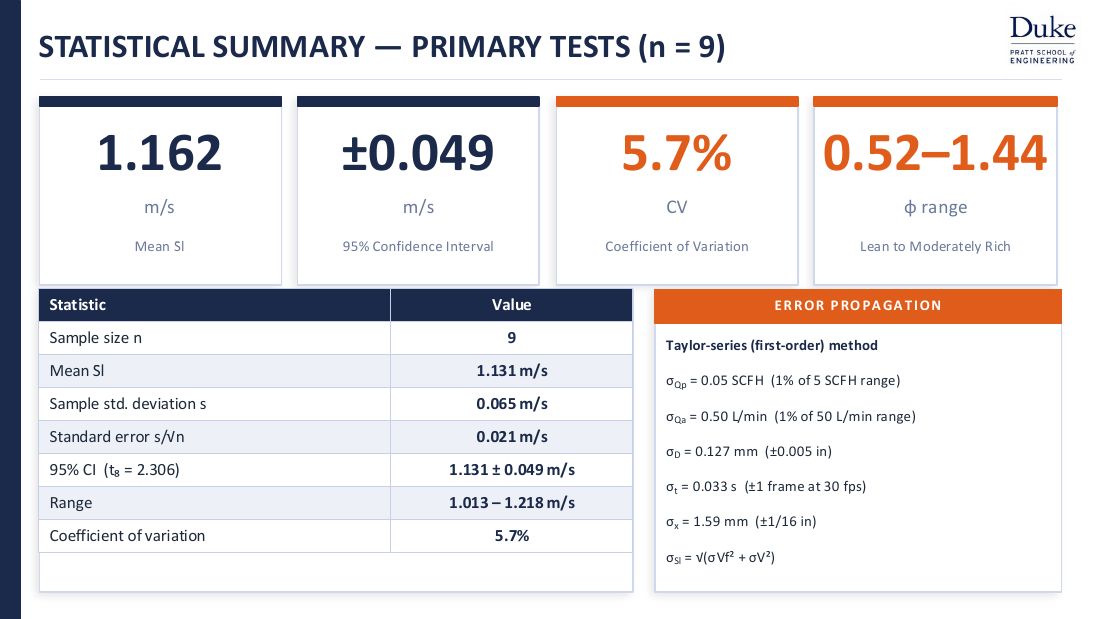
- First-order Taylor-series uncertainty propagation across rotameter precision, tube diameter tolerance, frame timing, and mark position
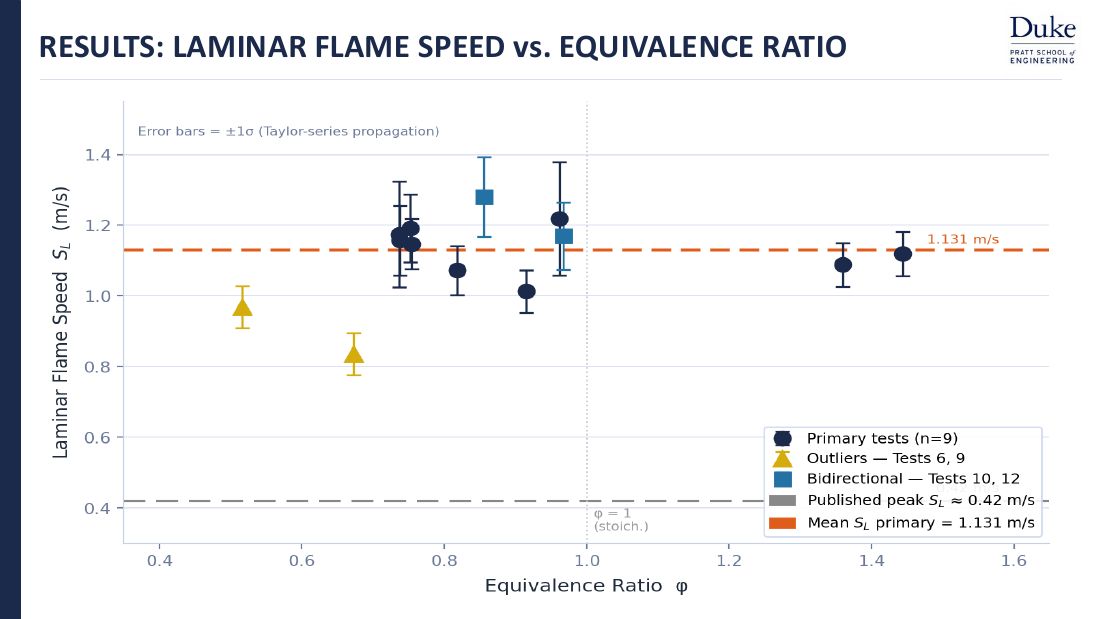
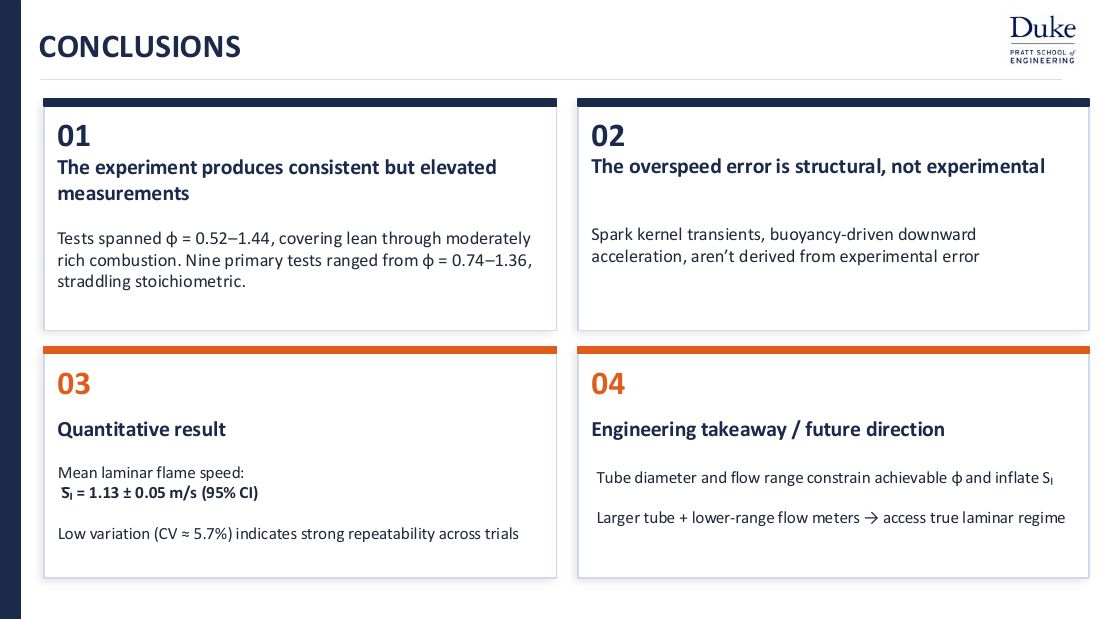
- Mean SL of 1.131 ± 0.049 m/s at 95% confidence over 9 primary tests, coefficient of variation 5.7%
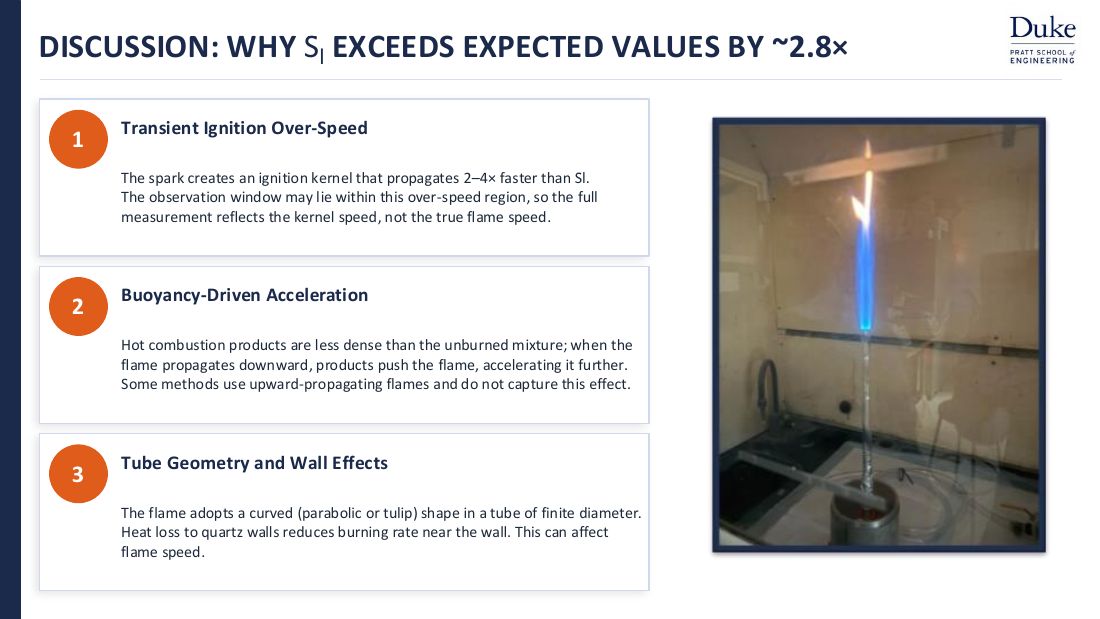
- Explained a systematic 2.7x offset from the published propane-air value of about 0.42 m/s through three concurrent mechanisms: transient ignition kernel overspeed, buoyancy-driven downward acceleration, and curved flame geometry in a finite tube
- 35-page technical report to Duke MEMS standards, with apparatus documentation, safety data sheets, bill of materials, and improvement recommendations for the next cohort
Final presentation
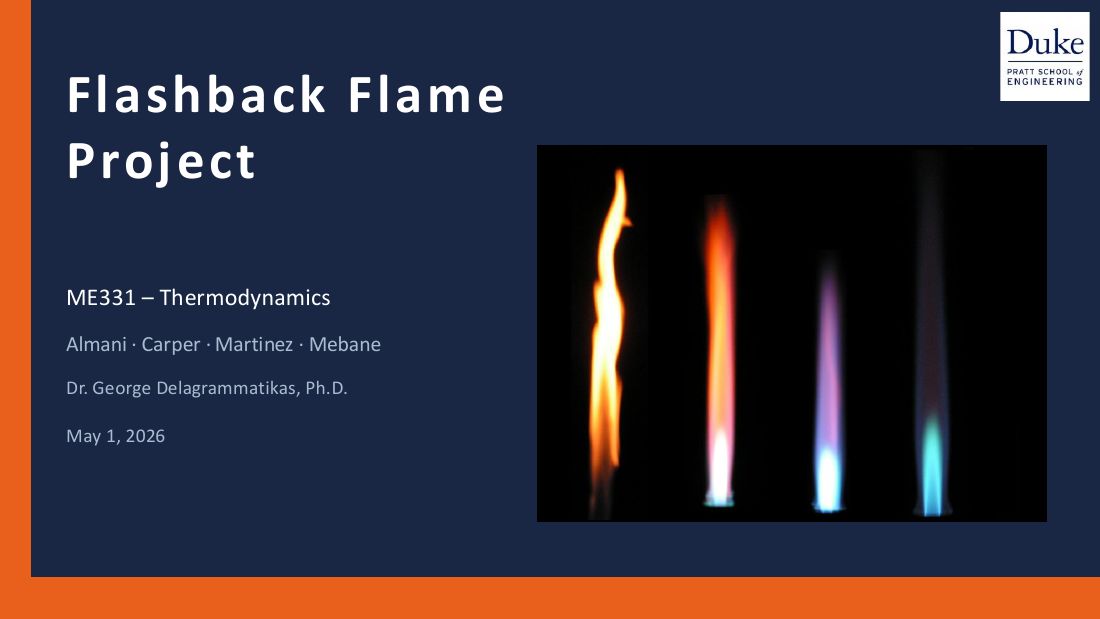
Sixteen slides that walk the project arc: background physics, equivalence ratio theory, apparatus design, procedure, all 13 trials, outlier analysis, and conclusions. Start here for the visual overview. Scroll sideways.
Report
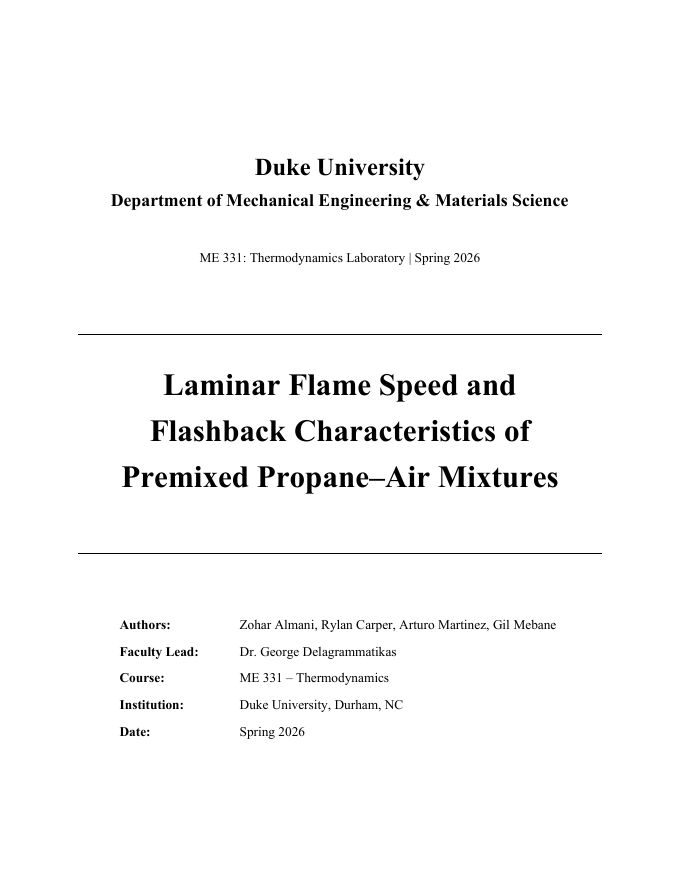
The first pages of the report are below and the full PDF opens with the button. Use it for apparatus specs, the calculation procedure, and the error propagation method.