Blind Assist Wearable
Mechanical, electrical, and enclosure design, Obstacle detection and object ID, 2022
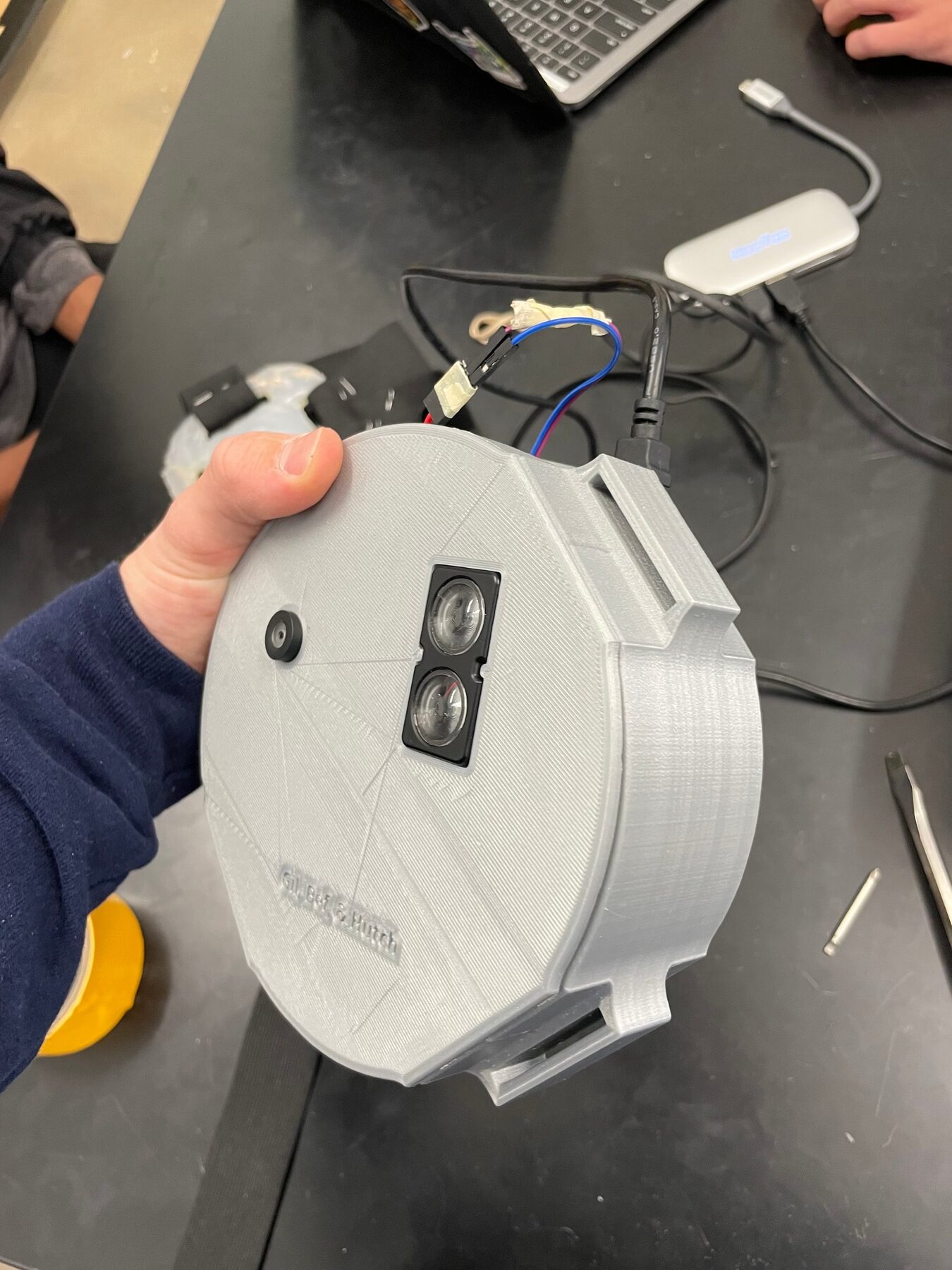
The enclosure assembly from Onshape: chest-mount housing with the sensor apertures and internal mounts. Drag to rotate, scroll to zoom.
| Role | Mechanical, electrical, and enclosure design |
|---|---|
| Context | Obstacle detection and object ID |
| Dates | 2022 |
| Field | Assistive Technology, Embedded Systems |
| Skills | Hardware Integration, CAD, 3D Printing, Competitive Benchmarking, Circuit Design, Embedded Systems, Sensors, Onshape, Cost Modeling |
The opportunity
Assistive technology for visually impaired people is a multi-billion dollar market, and the dominant wearable in the category, the OrCam MyEye, retails at about $4,250. That price puts the technology out of reach for most of the people it is designed for. The gap is not technical. The core sensing stack for real-time obstacle detection and object identification is available in commodity components for under $50.
Why 2022: Pixy cameras, small LiDAR modules, and compact microcontrollers had just reached prices accessible to student builders. That made this possible outside a research lab for the first time.
What we built
A chest-worn navigation aid integrating LiDAR, a camera, and spoken audio output. Two-person team. I owned mechanical design, CAD, electrical integration, and the 3D-printed enclosure. My partner handled embedded software.
- Obstacle detection. LiDAR proximity ranging translated into plain-language spoken callouts, not tones or buzzes
- Object identification. Pixy camera trained to identify pill bottles by label, one of the highest-frequency daily tasks for visually impaired users
- Audio layer. Speaker-driven natural language output, removing interpretation burden from the user
- Form factor. Chest-mounted to keep hands free and sensors aligned with the walking path. Enclosure printable in FDM without post-processing
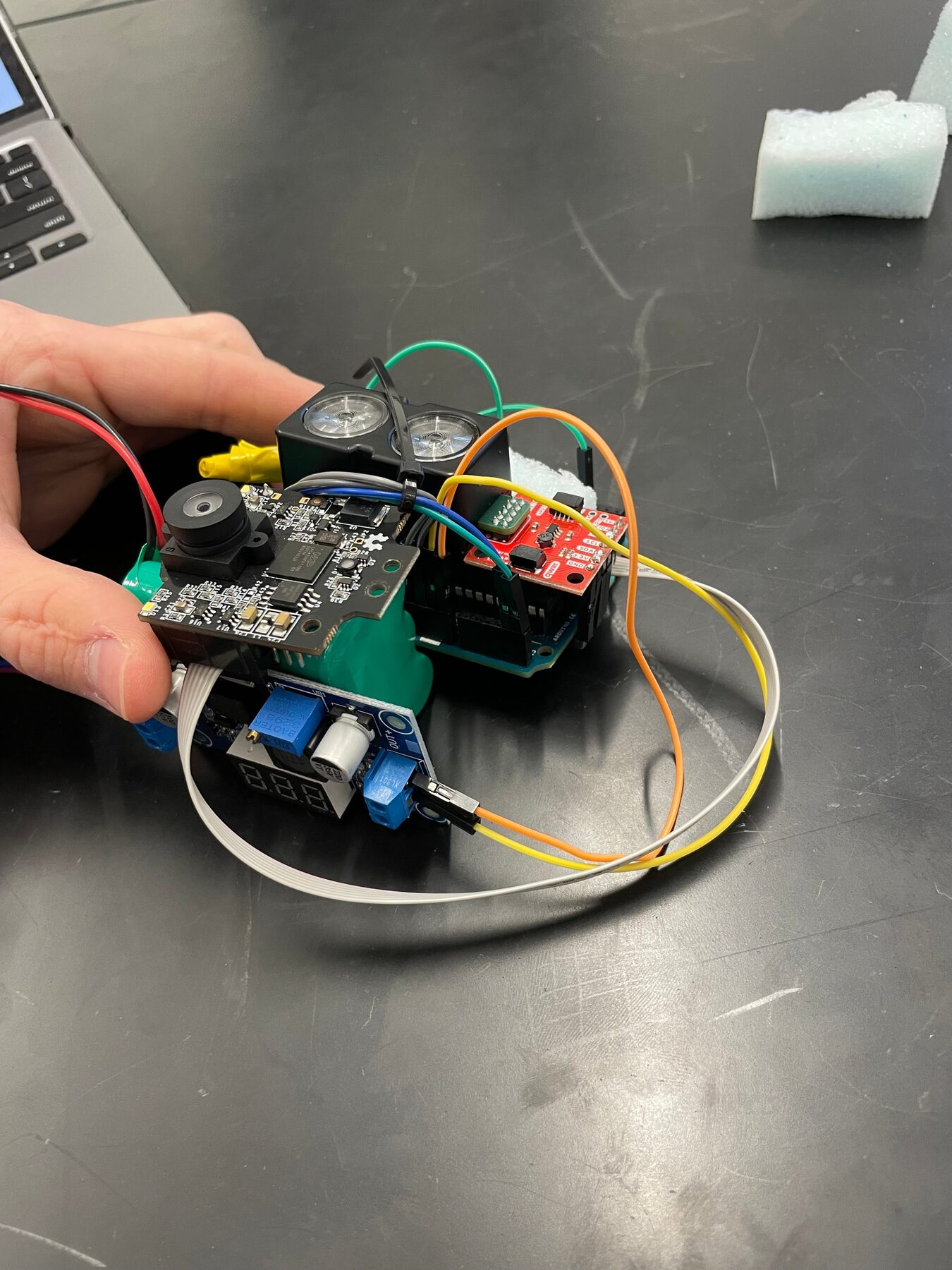
How it compares
| Feature | This device | OrCam MyEye | White cane |
|---|---|---|---|
| Obstacle detection | LiDAR, real-time audio | Camera-based | Tactile only |
| Object ID | Pill label recognition | Full product ID | None |
| Form factor | Chest-worn | Glasses-mounted | Handheld |
| Cost | About $50 in components | About $4,250 | About $30 |
The comparison is not fair in every row. A commercial product carries engineering, support, and distribution costs that a class project does not. The point is that a gap of more than $4,000 has no fundamental technical justification.
Outcomes
- Functional prototype delivering obstacle callouts and pill label identification in testing
- Sensing and output integrated into a single wearable enclosure
- Documented roadmap toward full label reading