bCPAP Liquid Level Monitor
Research and Design Lead, Makerere University, Uganda, Fall 2024
ProblembCPAP cuts neonatal mortality, but at Makerere the water chambers ran dry undetected. Nurse ratios ran as low as 1:20.
My roleLed a 4-person team from client brief to tested prototype in one semester.
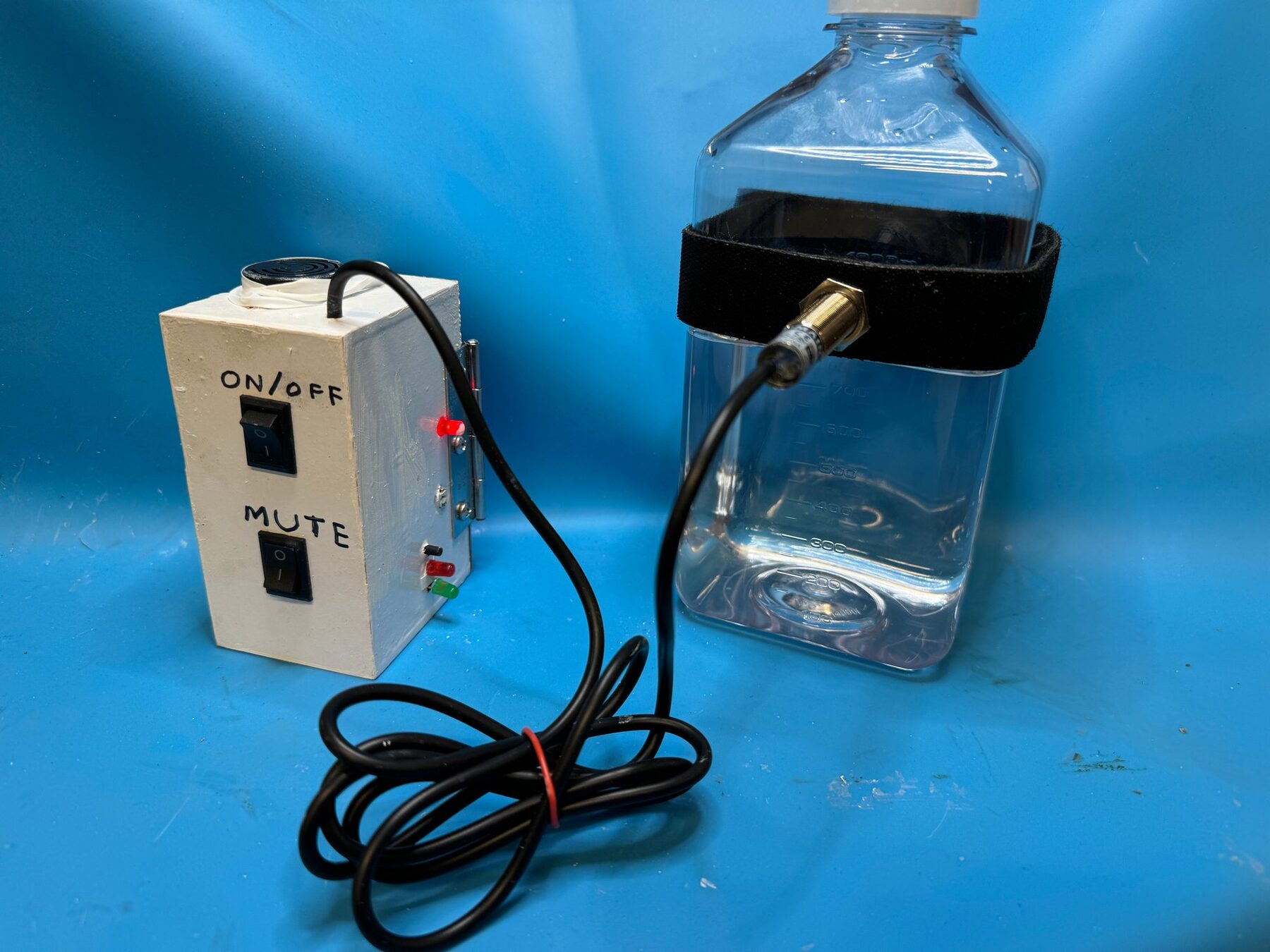
ResultCapacitive sensing, dual-mode alerts, under $15 per unit, survived 35 drops from 1.5 m. Delivered to Makerere faculty.
| Role | Research and Design Lead |
|---|---|
| Context | Makerere University, Uganda |
| Dates | Fall 2024 |
| Field | Neonatal Care, Global Health, MedTech |
| Skills | Clinical Needs Finding, Structured Ideation, Cost-Constrained Design, Test Planning, Circuit Design, Embedded Systems, Sensors, Leadership, Technical Writing, 3D Printing, Regulatory Awareness |
The problem
About 2.3 million newborns die each year, and respiratory failure is a leading cause. Bubble CPAP therapy cuts the need for mechanical ventilation and has roughly doubled survival in some low-resource trials. At Makerere University Hospital in Kampala it was failing anyway, for a preventable reason. bCPAP machines need water to function, and the chambers were running dry without anyone noticing. With nurse-to-neonate ratios as low as 1:20, visual checks were not happening. No alert existed. The gap between clinical evidence and patient outcome was a sub-$15 hardware problem.
What I did
Led a 4-person engineering team from client brief to a functional, tested prototype in one semester.
- Ran structured client interviews with Makerere University faculty to define design criteria and constraints specific to Ugandan wards
- Generated 80+ concepts across four design blocks (sensing, alerting, power, attachment) with morphological charts, then converged through several rounds of Pugh matrix screening
- Chose a capacitive proximity sensor after comparing optical, float, and scale-based options: non-invasive, no liquid contact, compatible with transparent containers of varying size
- Designed a dual-mode alert, LED plus buzzer, with a mute toggle for night wards
- Engineered for local manufacturability: parts available in Kampala markets, a wooden enclosure that needs no specialized tools, projected unit cost under $15
- Designed to mirror WHO and GHTF device safety principles for sanitation, sterility, and ward usability, working directly with clinical faculty. There was no formal Ugandan regulatory code to navigate, and I am not claiming regulatory work here
- Wrote and ran a test plan covering cost, drop durability (35 drops from 1.5 m), portability, calibration under 5 minutes, and primary function